Hydraulic cranes are the backbone of construction, infrastructure, logistics, and industrial projects across India. From metro rail expansion in cities like Mumbai and Delhi to wind turbine installations in Tamil Nadu and Gujarat, cranes do the heavy lifting that keeps projects on schedule.
If you operate or manage a mobile crane in India, a lack of a maintenance regime can directly affect safety, uptime, and compliance with Indian regulations. If you ignore these early warning signs, it can lead to costly breakdowns, project delays, and serious accidents.
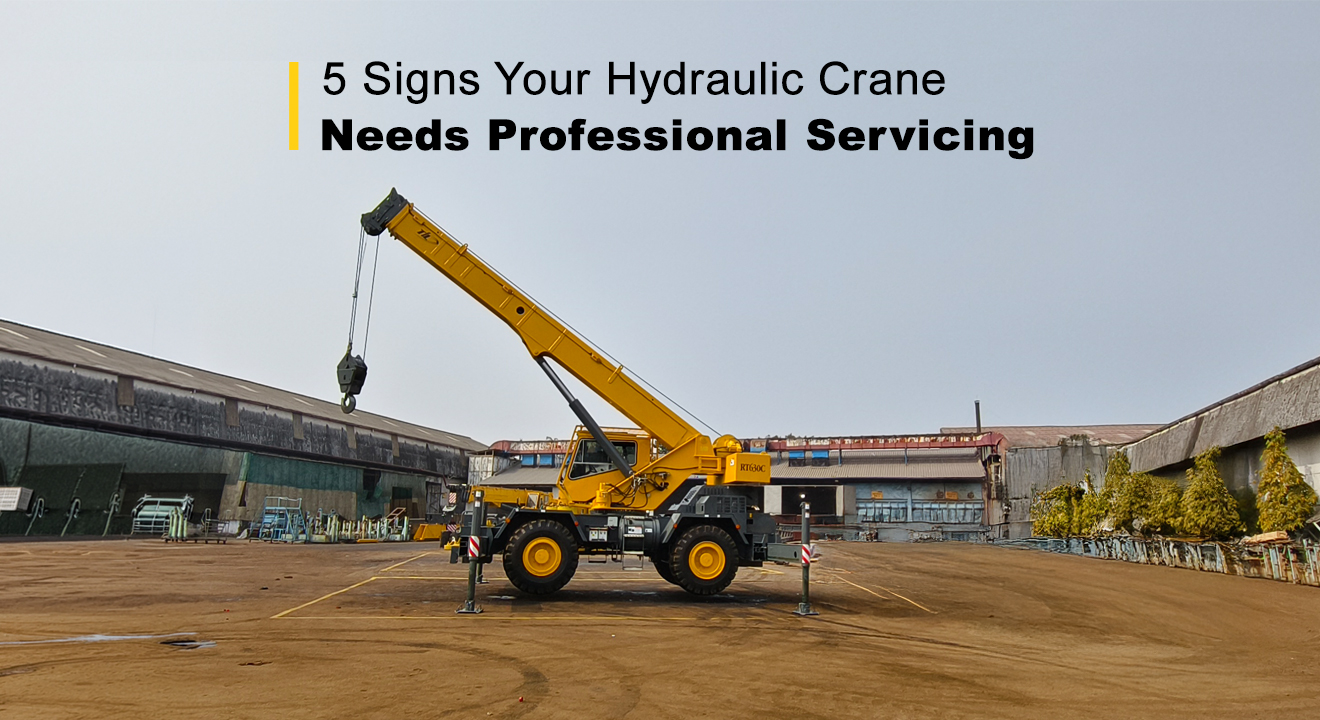
In this blog, we will discuss five clear warning signs that your hydraulic crane needs servicing.
Table of Contents
Is Your Mobile Crane In India Due For Service?
Now, hydraulic crane maintenance is not just about oil changes; it covers inspection of hydraulic systems, load testing, preventive maintenance schedules, and overall crane servicing to ensure safe lifting operations.
Especially in Indian working conditions where dust, heat, heavy loads, and long operating hours are common, crane servicing is non-negotiable.
1. Unusual Noises During Operation
Hydraulic cranes are powerful machines, but if you start hearing unusual noises, then it is one of the first red flags for crane maintenance, such as:
• Grinding or whining from the hydraulic pump
• Knocking sounds from the boom
• Hissing noises from hydraulic lines
• Squealing when rotating the slewing mechanism
These sounds are early indicators of wear or internal damage.
Why does this happen?
In India, cranes often work in high-dust environments like road construction sites or mining areas. Contaminants can enter the hydraulic system, which can clog the filters. Over time, this can also lead to pump and valve malfunction.
Why shouldn’t you ignore it?
A small internal issue can quickly turn into a major crane failure. For example, a damaged hydraulic pump can fail to operate during lifting, putting both load and operator at risk. Now, timely crane servicing can prevent this escalation.
2. Slow or Jerky Movements
A properly functioning hydraulic crane should move smoothly. You should experience that the boom is lifting steadily and the hook is in control. Also, the slewing motion should feel balanced.
However, if you notice these issues, then the crane’s hydraulic system likely needs attention, such as:
• Delayed boom response
• Jerky extension or retraction of the boom
• Irregular lifting speed
• Load swinging excessively while lifting
Why does this happen?
In Indian construction scenarios, cranes often run for extended shifts, sometimes beyond recommended operating hours. Now, without preventive crane maintenance, the oil quality degrades, and internal components wear faster. Also, the hydraulic oil can get contaminated, the cylinders can become worn out, air can get trapped in the system, or there might be faulty control valves.
Why shouldn’t you ignore it?
Jerky movements in the cranes directly affect load stability. Suppose you are working on high-rise construction projects, then unstable lifting can cause load drops or structural damage. Thus, you need to schedule professional hydraulic crane maintenance immediately.
3. Hydraulic Fluid Leaks
Hydraulic systems rely entirely on fluid pressure, and any leakage can reduce the efficiency of the system, which would compromise the lifting capacity of the crane.
So, if you notice any of these issues, then your crane’s hydraulic system has become defective, such as:
• Oil stains under the crane
• Wet or oily hydraulic hoses
• Dripping fluid from cylinders
• Reduced lifting power
Why does this happen?
In India’s hot climate, rubber seals and hoses degrade faster. Continuous exposure to heat and dust accelerates wear. Mobile cranes working in remote sites may also face rough terrain, which stresses hydraulic lines.
Why shouldn’t you ignore it?
Ignoring small leaks can result in complete hydraulic failure during a lift. Thus, routine inspection of hoses, seals, and fittings is a critical part of crane servicing in India. Moreover, if you operate a fleet of mobile cranes in India, you must include leak detection in the daily inspection checklist.
4. Overheating of Hydraulic System
Most of the operator reports show that hydraulic cranes generate heat during operation, but if the heat reaches an excessive level, then it is a warning sign.
Here are a few symptoms that you might notice when the hydraulic system of cranes is overheating, such as:
• Extremely hot hydraulic oil
• Burning smell
• Reduced lifting efficiency
• Warning indicators on the control panel
Why does this happen?
India’s ambient temperatures can reach 45°C or more in many regions. Now, the hydraulic system of the machines operating in these regions is under serious stress. Also, if the crane is under continuous operation, there might be issues of blocked coolers, dirty oil, or overloading beyond rated capacity. All these together lead to overheating issues.
Why shouldn’t you ignore it?
In large infrastructure projects, you might know that downtime can cost lakhs per day. So, if your crane frequently overheats, it’s a clear signal that servicing is overdue. Thus, by implementing a preventive hydraulic crane maintenance process, this would ensure that cooling systems are clean and oil quality is maintained.
5. Reduced Lifting Capacity
If you find that your crane cannot lift loads that it previously handled easily, then it is an alarming sign. Along with that, you might also notice other crane failures, such as:
• Slower lifting even with moderate loads
• Difficulty reaching full boom extension
• Frequent overload warnings
• Need to increase engine RPM for normal lifting
Why does this happen?
In India’s competitive construction market, operators sometimes push cranes close to maximum capacity to meet deadlines. Now, if you are repeatedly overloading the crane, then it can weaken the hydraulic components. With due time, the internal hydraulics might suffer from leakage, the pumps can get worn out, and the pressure relief valve can start to malfunction.
Why shouldn’t you ignore it?
If the crane cannot generate the required pressure, load stability becomes unpredictable. According to the safety checklist, reducing the lifting power can directly affect the safety. Thus, regular load testing and professional crane inspection are essential to verify safe working load (SWL) compliance.
Why Preventive Hydraulic Crane Maintenance Matters in India?
The Indian construction and infrastructure sector is expanding rapidly. The demand for mobile cranes in India continues to rise, along with the development of metro projects, highways, ports, and industrial plants. Thus, with the increased usage of cranes comes increased responsibility.
Proper hydraulic crane maintenance can help you with:
• Improving equipment lifespan
• Reducing unexpected breakdowns
• Lowering long-term repair costs
• Ensuring compliance with safety regulations
• Protecting workers and site supervisors
Based on the Indian safety standards and industrial norms, a hydraulic crane needs to go through regular inspection and load testing of lifting equipment. Moreover, neglecting servicing can also lead to insurance complications in case of accidents.
Thus, you need to look for companies operating multiple mobile cranes in India. Partnering with a reliable crane manufacturer and after-service provider, such as TIL Limited, can help you with a more cost-effective solution than reactive repairs. In a fast-growing construction landscape like India, well-maintained cranes are more than just assets; keeping projects moving safely and efficiently.